
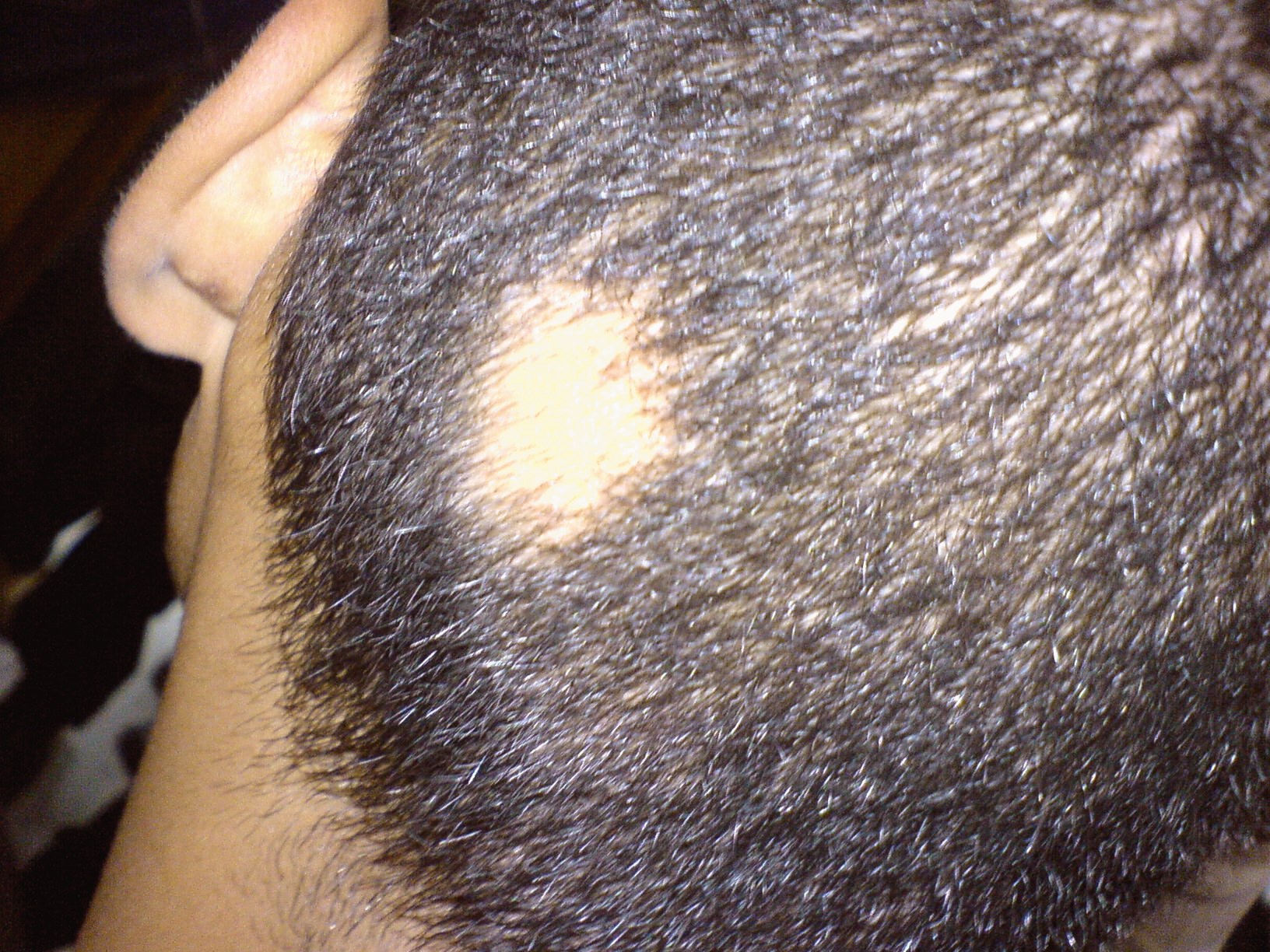
Alopecia is a term for hair loss that can affect the scalp or other areas of the body. It normally appears as a ten cent coin like bald spot that is smooth and shiny much like having a ringworm. While it is not life-threatening, it can have significant physical and emotional impacts. The condition occurs when the normal cycle of hair growth is disrupted, leading to thinning, shedding, or complete baldness. If you have onset of alopecia you need to have it medically treated immediately as it will not go away by itself and may even get worse.
Many years ago I had alopecia my work colleagues were alarmed and insisted I had to see a doctor. So I went to the National Skin centre near Tan Tock Seng hospital after securing an appointment with a professor (senior doctor). He looked at my scalp and told me it was alopecia and asked if I was having a stressful life lately. And that it is actually autoimmune system ie my body attacking itself. He proceeded to give me a syringe full of jabs around the scalp for about 5 minutes. A bit stinging but tolerable. The whole cost with consultation and jabs were less than $200.
Within a month tiny hairs started growing filling out the bald spot. And the strange part was the new hairs were white lacking pigmentation. Later they turn black.
I went back to this doctor again complaining that the hair on top of my head was thinning and if he could give me another jab. He said the jabs work on alopecia and not thinning of the scalp.
There are several types of alopecia. Androgenetic alopecia, often called male or female pattern baldness, is the most common form and is largely influenced by genetics and hormones. Alopecia areata is an autoimmune disorder where the body’s immune system mistakenly attacks hair follicles, resulting in patchy hair loss. Other forms include alopecia totalis (complete loss of scalp hair) and alopecia universalis (loss of all body hair).
Causes of alopecia vary and can include heredity, hormonal changes, stress, nutritional deficiencies, medications, or underlying medical conditions. Diagnosis usually involves a physical exam, medical history, and sometimes blood tests or scalp biopsies.
Treatment depends on the type and severity. Options may include topical or oral medications like minoxidil or finasteride, corticosteroid injections, light therapy, or, in some cases, hair transplantation. While not all forms of alopecia are reversible, many treatments can slow progression or encourage regrowth.
Beyond the physical effects, alopecia can impact self-esteem and mental health. Support groups, counseling, and cosmetic solutions such as wigs or scalp micropigmentation can help individuals cope.
Raising awareness about alopecia encourages compassion and empowers those affected to seek medical advice and support.
 Manhoodtherapies Singapore/83766338